
Having an absolute desire to experience life is beautiful. While it can be frustrating to bounce between hobbies or interests over long periods of time (aside from writing), each new experience leaves me with a greater understanding of my interests and values. These experiences also provide options for new amusements, paths, and goals in futures near and far. This year I want to learn some Spanish, continue my writing, learn to crochet, and fertilize my green thumb. What I’m most excited about right now though, is aquarium-keeping.
While I think that, like any pet-related hobby, aquarium-keeping has its plethora of uninformed and ignorant people, knowledgeable hobbyists cater towards the needs of their creatures and create vibrant underwater escapes that feel like home to its inhabitants. As long as the needs of the fish are a primary focus, the tank will always lead to personal fulfillment (and it’ll be aesthetically alluring). I have one incredible aquarist in my life who I am grateful to lean on, as while I am new to the hobby, I do not intend to be ignorant or uninformed. As our understanding of animal consciousness grows, more studies are released that discuss the reality of pain, fear, stress, and boredom in fish; their emotions are vital to their health.
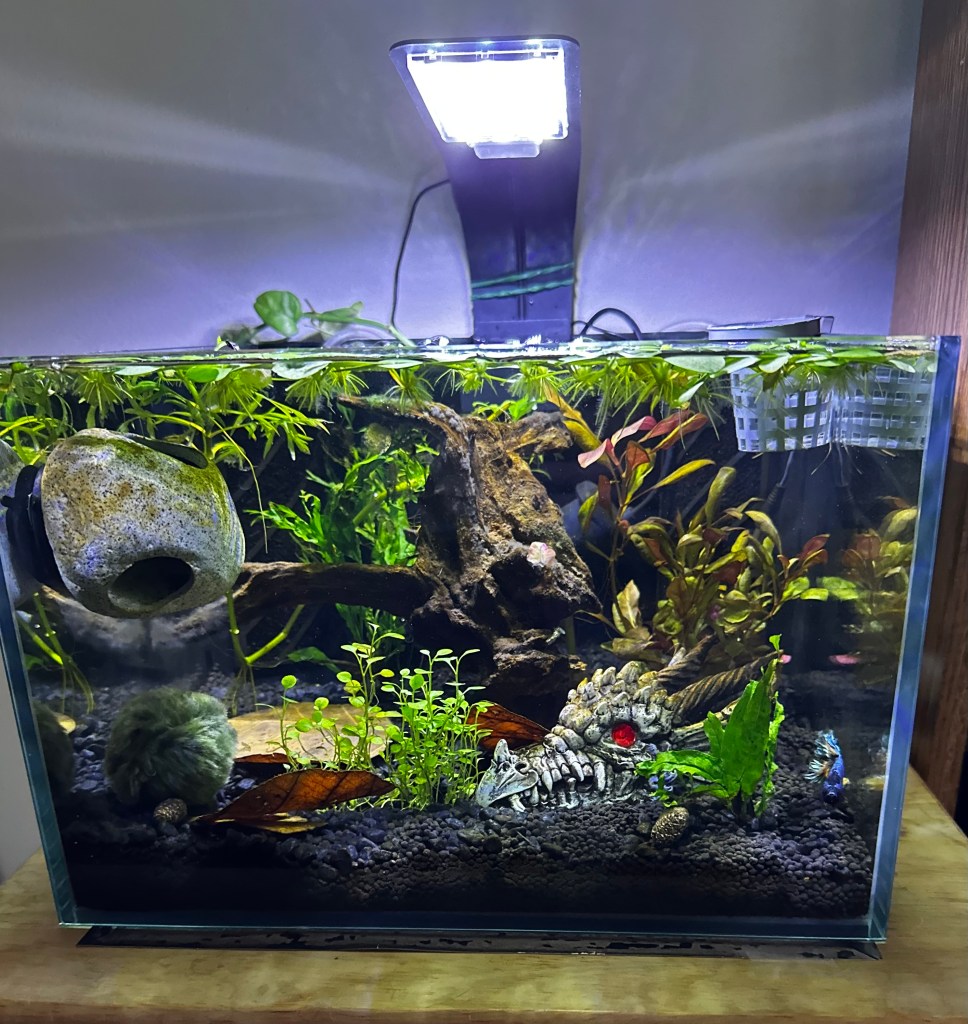
I have a five-gallon tank that houses Bruce the betta fish. He’s in there with five different types of live plant, a moss ball, some Catappa leaves, a cave, and driftwood. He seems to enjoy himself enough. He’ll follow our fingers, flare at the snails and his own reflection, and rest wherever he can find a relaxing space. He’s very cute.
More recently, I’ve set up, cycled, and stocked a twenty-gallon tank. It took quite some time to create a reliable nitrogen cycle with the right beneficial bacteria, but it’s consistent now. It’s got a pretty base hardscape–simple black substrate all around, a fairly large piece of driftwood in the middle, and rocks separating the right third of the tank from the left two-thirds. The left side contains a multitude of different plants, all in different rooting stages, as well as the heater and sponge filter. The right side has another large piece of driftwood in the rear and is mostly barren with soft pebbles for the fish to sift through. It’s fun to watch, and the fish seem to prefer the open side more than the planted side.
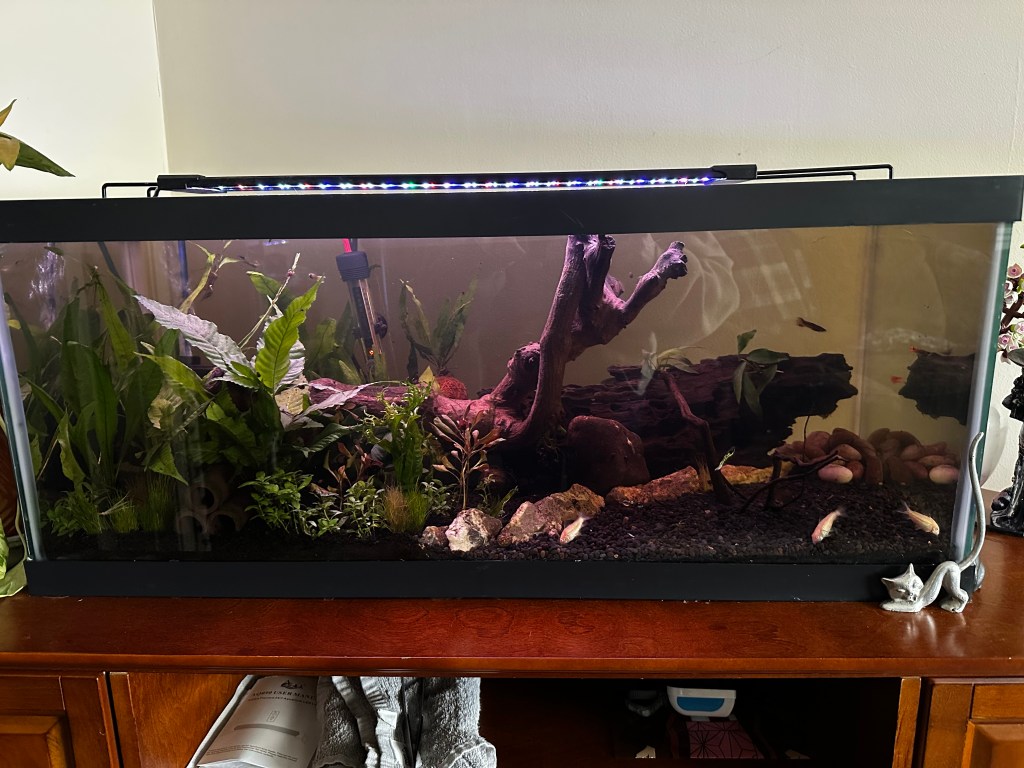
The tank is primarily stocked with my absolute favorite fish, endlers. I’ve added some scarlets, calicos, tigers, and miracles all together. I’ve also added two guppies for some size variation (they’re essentially cousins, as they’re both livebearers). All endlers and guppies are male, so there are no concerns about reproduction. If there were females in the tank, I would not have mixed colors. Mixed-color breeding will eventually result in endlers that look more like their wild selves; it makes future generations much more dull.
Once the tank adjusted to the endler bio load, I also added some albino corydoras. With the endlers’ preference for open water, that leaves a niche on the substrate. Not only do these guys do their part by looking pretty, but they also help to clean up algae and leftover food that could potentially lead to ammonia spikes. The albinos are also a nice contrast to the black substrate. They spend most of their time digging through the soil looking for snacks, but they also occasionally dart to the surface for a gulp of air. Sometimes when they do this, it makes a noise that sounds a lot like a squeak. They’re adorable and I hope to add more of them soon, as they prefer to be in slightly larger groups than I currently have.
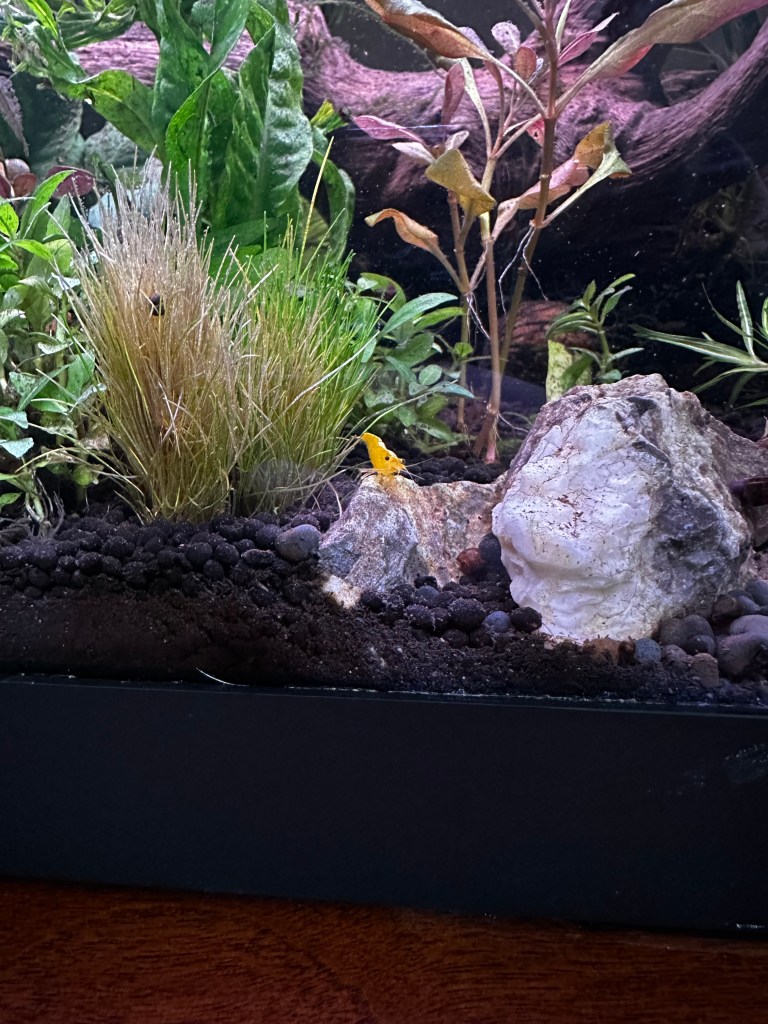
One of the more recent additions to the tank are a few yellow shrimp of the Neocaridina genus. These guys are the hardiest and easiest to care for, making them ideal for beginners like me. Unlike the endlers, guppies, and corydoras, these shrimp come in mixed-sex groups and will (supposedly) reproduce like crazy. As each color was painstakingly bred, professionals and hobbyists alike recommend not mixing shrimp colors because as they interbreed, their color will eventually become drab. Right now I only have the original five that I introduced to the tank a couple weeks ago. They haven’t blessed me with any shrimp fry yet.
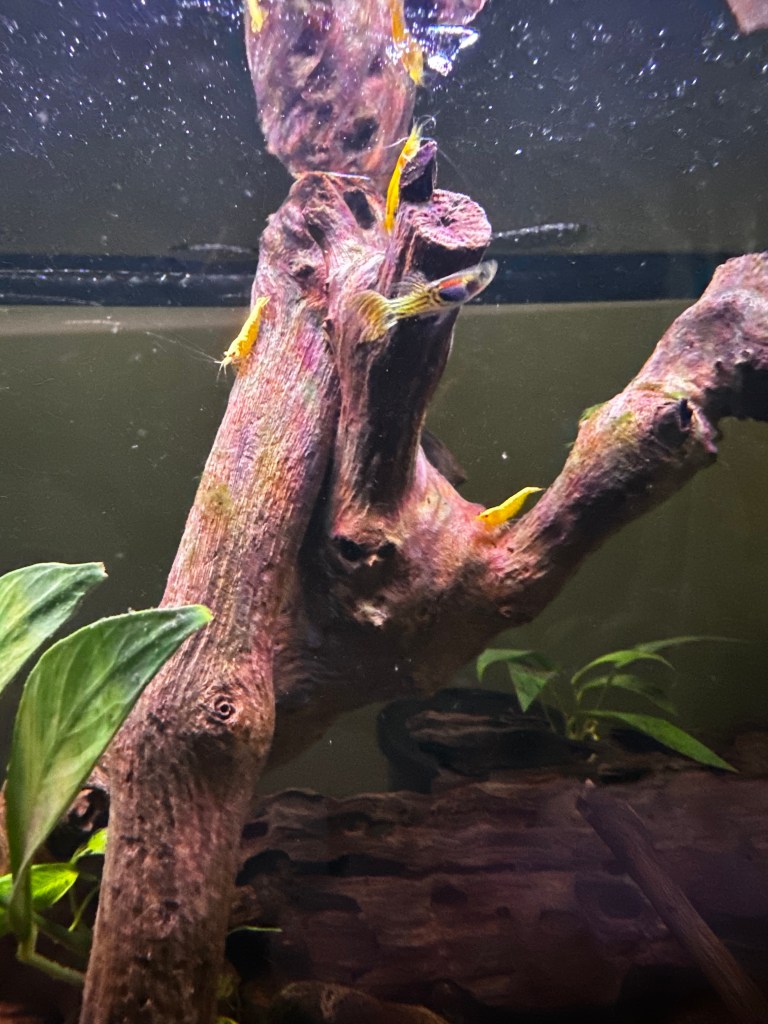
The final creatures in my tank were ones I did not expect to add, and ones that I still have mixed feelings about–assassin snails. These guys do exactly what their name suggests. They kill and eat other snails. I have a horrible ramshorn snail pest infestation which is bad enough that the other day I pulled out over eighty of them and barely left a dent in their population. I know that they can be beneficial. They’re omnivores and help clean up waste, whether it be excess food, poop, dead plants, etc. My problem with them is that they exist in extreme excess. Everywhere I look is covered in ramshorns. The suggested solution to this problem is to introduce a natural predator that is still safe for every other creature in the tank. Assassin snails are pretty, don’t reproduce as quickly, and primarily feast on other snails (any other creature in the tank is too fast). I only felt hesitant about introducing them because their killing method is to slowly eat the other snails alive (which is a bit brutal for a controlled environment, but I digress). Thus far they’ve been a bit slow to get the job done, but I have no complaints. I’m finding more and more empty snail shells. God bless assassin snails, I guess.
I’ve truly enjoyed the process of creating and caring for these tanks. When I get too anxious, I prescribe myself “tank time,” where I sit in a rocking chair and observe the fish. They’re also nice to sit next to and write, though they can be a bit distracting. I hope you’ve enjoyed reading about my aquarium!










Leave a Reply